
In brief
Lamborghini has kept the same identity through six changes of ownership, multiple bankruptcies and the 1998 acquisition by the Volkswagen Group via Audi because its brand meanings are unusually clear. Born in 1963 after Ferruccio Lamborghini argued with Enzo Ferrari, it positioned itself as the anti-Ferrari: provocative design from the Miura to the Aventador, and a naming system built entirely around fighting bulls.
- Ferruccio Lamborghini, a tractor manufacturer from Sant'Agata Bolognese, founded the company in 1963 after Enzo Ferrari dismissed his complaint about a faulty clutch
- Designer Marcello Gandini, responsible for the 1966 Miura and 1974 Countach, aimed to create objects that seemed physically impossible
- Ownership passed from Ferruccio Lamborghini to Rossetti, Leimer, the Mimran Group, Chrysler, Megatech and in 1998 to the Volkswagen Group via Audi
In 1963, Ferruccio Lamborghini, an entrepreneur from Sant’Agata Bolognese who had made his fortune building tractors, approached Enzo Ferrari to complain about the faulty clutch on his Ferrari 250 GT. Enzo Ferrari dismissed him dismissively: “You built tractors, I build sports cars.” Ferruccio Lamborghini left Maranello and founded a car company.
It’s a story that has the trappings of a founding myth, and like all founding myths, it should be approached with historical caution but strategically valued. Whether true or partially fictionalized, this origin story has helped build one of the clearest positionings in the entire automotive industry: Lamborghini as a provocative answer to Ferrari, ostentation versus restraint, excess versus elegance.
But the Lamborghini case is interesting not only for its birth. It is interesting for what it has managed to accomplish in sixty years: surviving six changes of ownership, multiple bankruptcies, an acquisition by a German giant, and maintaining an intact brand identity that millions of people around the world instantly recognize. This is the true case study.
1. The Origin Story as Competitive Positioning
Few companies in the world have an origin story as precise and narratively powerful as Lamborghini. It didn’t originate in a garage like Apple, it didn’t originate from a technological vision like Tesla, it was born from an offense. From an argument. From a personal rivalry transformed into a business venture.
From a brand-building perspective, this is an extraordinary asset for two reasons. The first: it immediately defines the positioning by contrast. Lamborghini is not Ferrari, it is the anti-Ferrari. Not the refined reserve of the Prancing Horse, but the explicit ostentation of the Bull. Not Maranello and tradition, but provocation and excess.
The second reason is more subtle: a conflictual origin story creates emotional engagement. The public takes sides. And those who choose Lamborghini aren’t just buying a car, they’re taking a stand in a rivalry that has lasted sixty years. This transforms the purchase into an act of identity, not just a commercial transaction.
2. Design as a manifesto: the aesthetics of provocation
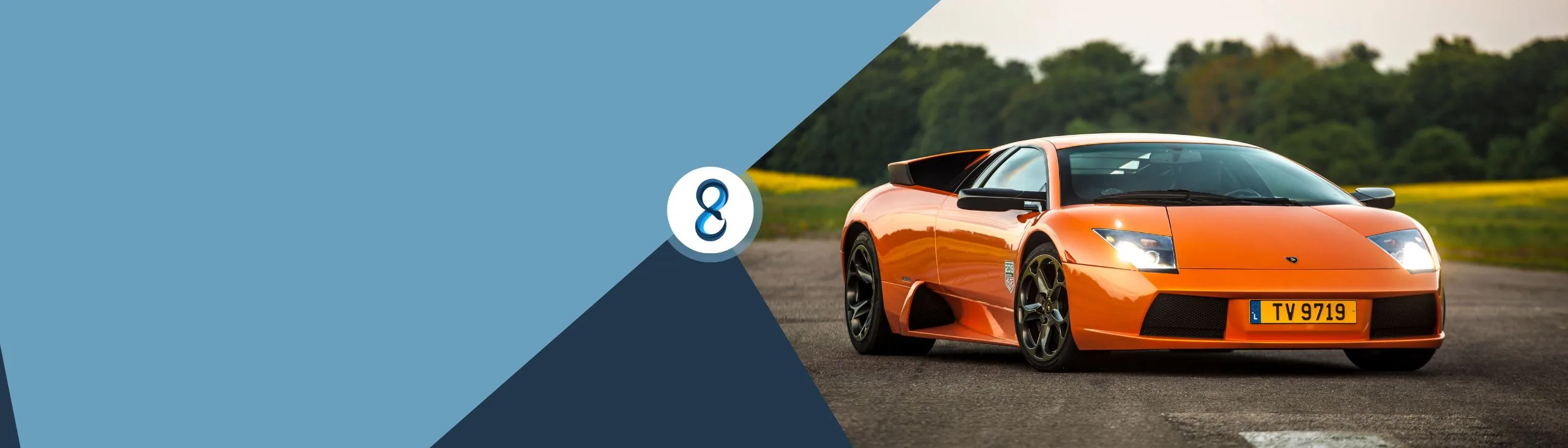
If Ferrari builds beautiful cars in the classic sense of the word—proportioned, elegant, refined—Lamborghini has always built cars that shock. The 1966 Miura was a visual shock. The 1974 Countach was something that didn’t seem to belong to reality. The Diablo, the Murciélago, the Aventador—each generation has pushed further toward visual excess.
This isn’t aesthetic chance. It’s a coherent design strategy that experts call bold design language: a deliberately extreme visual language, recognizable from a distance, impossible to ignore. Where Ferrari says “look at me,” Lamborghini says “you can’t help but look at me.”
Designer Marcello Gandini, responsible for the Miura and Countach, has stated on multiple occasions that the goal was to create something that seemed impossible, an object that physics shouldn’t allow. This philosophy has remained in the brand’s DNA: every Lamborghini must seem slightly impossible.
From a marketing perspective, extreme design serves a specific function: it generates spontaneous attention. A Lamborghini parked on the street attracts more glances than any billboard. The product is its own advertising medium, what today we would call an intrinsically shareable object.
3. Names as a Brand System: Hidden Consistency
There’s a detail about the Lamborghini brand that many don’t consciously notice, but it significantly contributes to the consistency of its identity: all its models are named after famous bulls or terms related to bullfighting. Miura, Espada, Islero, Urraco, Countach (Piedmontese dialect), Diablo, Murciélago, Gallardo, Aventador, Huracán, Urus.
This is an example of a brand naming system: a consistent naming system that builds a precise semantic association over time. The bull is not a random symbol—it is the opposite of the prancing horse. Where Ferrari evokes speed and lightness, Lamborghini evokes brute force, power, and aggression.
Nominal consistency helps build what brand strategy calls a brand world: a coherent and recognizable universe of meanings that goes beyond the individual product. Anyone who buys a Huracán knows they are entering a precise symbolic system—and this strengthens the sense of belonging.
4. Six owners, one identity: the resilience of the brand
Lamborghini’s ownership history is almost unique in the industrial landscape. After Ferruccio Lamborghini, the company passed through Georges-Henri Rossetti, René Leimer, the Mimran Group, Chrysler, Indonesian Megatech, and finally, in 1998, to the Volkswagen Group via Audi. Each transition often occurred through bankruptcy proceedings or emergency sales.
Yet the brand survived intact—and in some cases even strengthened. How is this possible?
The answer lies in a fundamental principle of brand management: when an identity is sufficiently strong and distinctive, it survives changes in ownership. Over time, the Lamborghini brand had accumulated a wealth of meanings—excess, power, Italy, provocation—so solid that it withstood corporate turbulence.
The acquisition by Audi in 1998 is particularly significant. A German automotive giant, known for its precision engineering and measured design, acquired the Italian brand.
Frequently asked questions
Why did Ferruccio Lamborghini start making cars?
According to the founding story, in 1963 Ferruccio Lamborghini, who had made his fortune building tractors in Sant'Agata Bolognese, complained to Enzo Ferrari about the faulty clutch on his Ferrari 250 GT. Ferrari dismissed him with the remark that he built tractors while Ferrari built sports cars, so Lamborghini left Maranello and founded his own car company. The story should be treated with historical caution.
Why are Lamborghini models named after bulls?
All Lamborghini models take their names from famous fighting bulls or bullfighting terms: Miura, Espada, Islero, Urraco, Diablo, Murciélago, Gallardo, Aventador, Huracán and Urus, with Countach coming from Piedmontese dialect. This consistent naming system builds a precise semantic association over time. The bull is the deliberate opposite of Ferrari's prancing horse: where Ferrari evokes speed and lightness, Lamborghini evokes brute force, power and aggression.
What is the difference between Lamborghini and Ferrari brand positioning?
Lamborghini positions itself as the anti-Ferrari: ostentation versus restraint, excess versus elegance, provocation versus tradition. Ferrari builds cars that are beautiful in the classic sense, proportioned and refined, while Lamborghini builds cars designed to shock, from the 1966 Miura to the Aventador. The contrast means buyers take sides in a rivalry that has lasted sixty years, turning the purchase into an act of identity.
Who has owned Lamborghini over the years?
After founder Ferruccio Lamborghini, the company passed to Georges-Henri Rossetti, René Leimer, the Mimran Group, Chrysler, Indonesian Megatech and finally, in 1998, to the Volkswagen Group through Audi. Many of these transitions happened through bankruptcy proceedings or emergency sales. The brand survived intact because its accumulated meanings, excess, power, Italy and provocation, were strong enough to withstand the corporate turbulence.
What is bold design language in car branding?
Bold design language is a deliberately extreme visual style, recognizable from a distance and impossible to ignore. Lamborghini has applied it since the 1966 Miura and the 1974 Countach, both by designer Marcello Gandini, who wanted objects that physics should not allow. The commercial function is spontaneous attention: a Lamborghini parked on the street draws more glances than a billboard, so the product becomes its own advertising medium.
Last substantive revision: June 4, 2026.